Table olives cannot be eaten straight from the tree. A series of steps is required to remove natural bitterness, balance salt content and make the fruit shelf-stable.
Harvest and sourcing
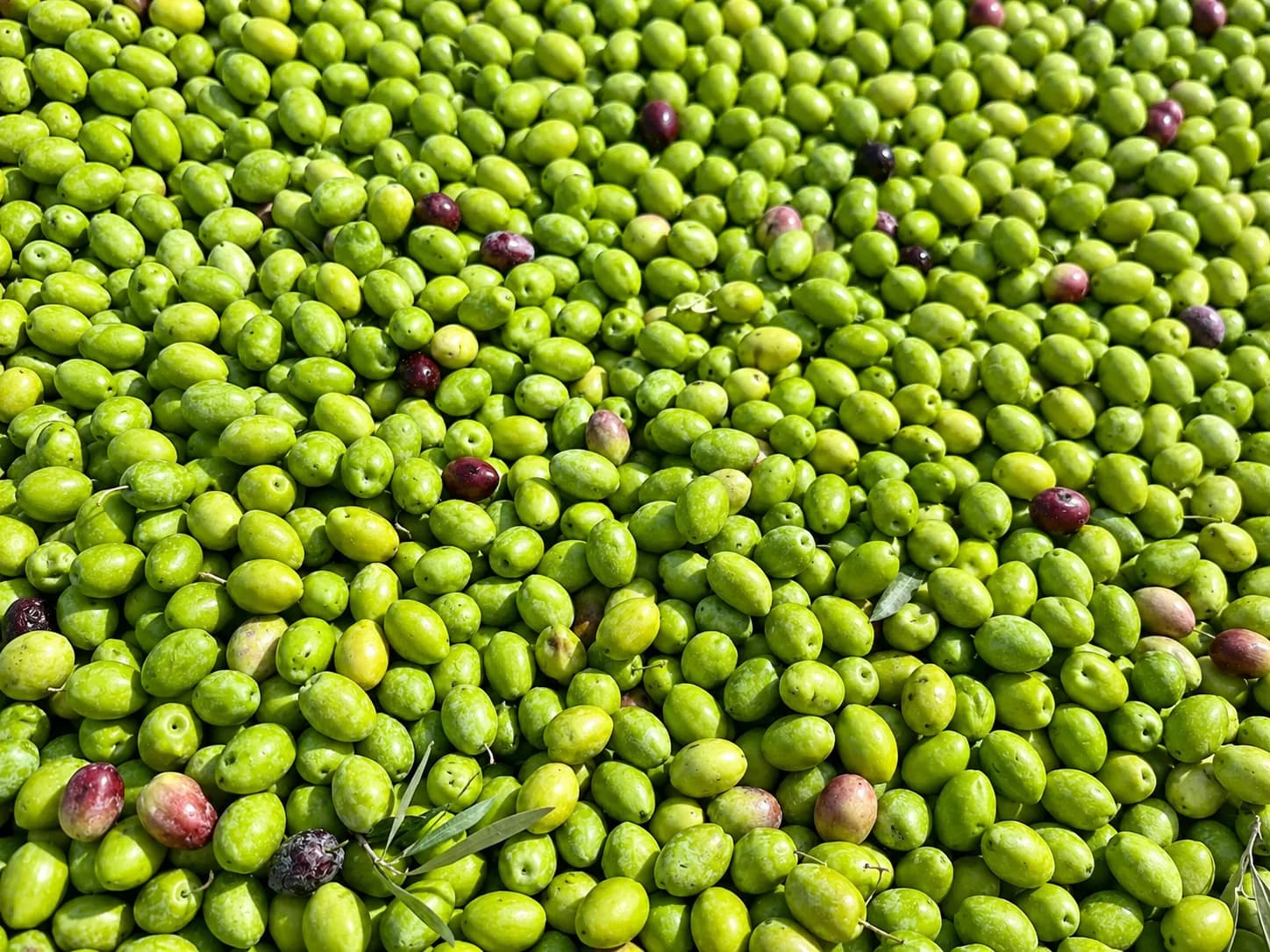
Production starts with harvesting at the right time. Green varieties are picked before ripening, while black varieties are collected after the colour change is complete. Gemlik, Uslu, Domat and Edremit are widely grown around Akhisar.
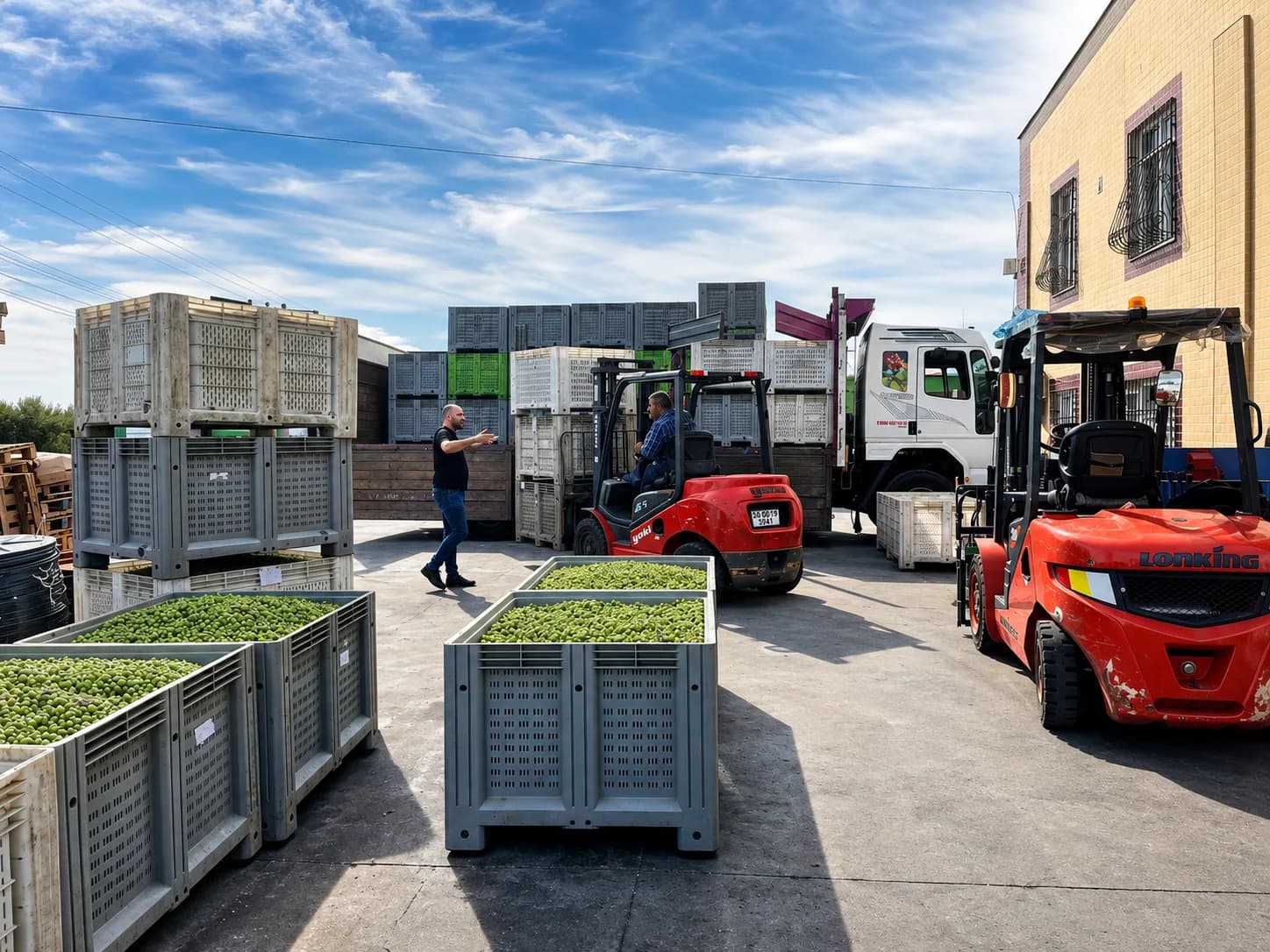
At Durmuşoğlu Zeytincilik we source raw material from our own groves and from local growers in the region. Olives arriving at the plant during harvest are separated by variety and caliber range at intake.
Storage and fermentation
Olives are moved into brine tanks under appropriate storage conditions. Fermentation dissolves the bitter compounds and gives the product its characteristic taste.
Fermentation time varies by variety, fruit size and the target product type, so scratched, cracked, kokteyl and oil-cured products each follow a different process.
Processing and calibration
Fermented olives are processed as whole, scratched, cracked, sliced or stuffed products. At this stage the fruit is separated into caliber ranges.
Caliber expresses the number of fruits per kilogram: the lower the number, the larger the fruit, which affects both shelf presentation and intended use.
Packaging
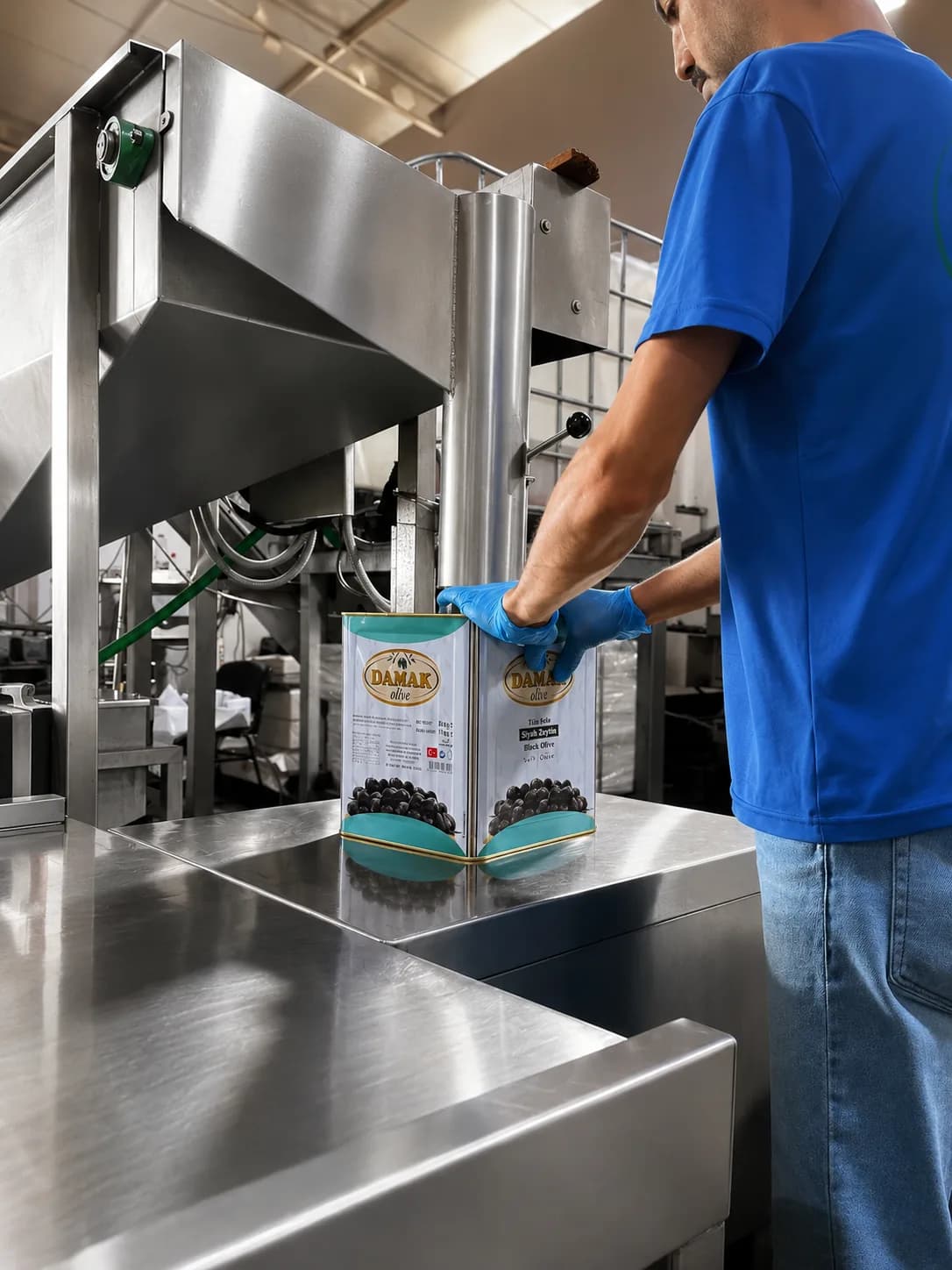
In the final stage the product is packed for its intended sales channel: 720 cc glass jars and vacuum packs for retail shelves, and 8 kg and 10 kg tins for wholesale, food service and export orders.
Glass jar — 720 cc, 350-400 g drained weight
Vacuum pack — 200, 400 and 800 g net weight
Plastic jar — 900 and 1000 g drained weight
Tin — 8 kg and 10 kg drained weight